

By Ben’s Tree and Garden | Fully Insured | Servicing All Sydney Suburbs
Look, every Sydney homeowner has been there. You glance up at the massive gum tree dominating the backyard and think, “That thing is leaning a bit more than last year.” Or you’ve got a jacaranda that’s gorgeous for three weeks in spring and an absolute menace for the other forty-nine — dropping branches on the fence, clogging the gutters, and slowly eyeing up your neighbour’s pergola.
Trees are brilliant. They provide shade, they look incredible, and they add genuine value to a Sydney property. But when they become a problem — whether that’s a safety risk, an overgrown nuisance, or a dead trunk that’s one easterly away from becoming someone’s problem — you need to know your options.
This guide covers everything: how to figure out whether your tree needs cutting, trimming, or full removal; what the process actually involves from start to finish; what it’s going to cost you in 2026; and how to get it done without running foul of council regulations that, trust us, you don’t want to learn the hard way.
Sydney Trees: Why They’re Brilliant and Also Occasionally a Massive Headache
Sydney’s urban tree canopy is genuinely beautiful, and councils work hard to protect it. The State Environmental Planning Policy (Vegetation SEPP) combined with individual council Development Control Plans means that trees — even on your own private property — are protected by law in most cases.
This is actually a good thing for the environment. But it does mean that the days of just firing up the chainsaw on a Saturday morning and sorting out the problem tree yourself are largely over for most Sydney homeowners. Get it wrong and you’re looking at fines from $1,100 for individuals up to $1.1 million for serious breaches — penalties that make even the most ambitious DIY-er think twice.
Most Sydney councils require a permit for any tree over about 4–5 metres in height or with a trunk diameter exceeding 30–40cm at chest height. Rules vary between council areas, so what’s permitted in one suburb might require full documentation in the next one over.
The exceptions worth knowing:
Some species are exempt from permit requirements entirely — invasive species like African olive, false acacia, and cocos palm can typically be removed without council approval (though always confirm with your specific council first, and get an arborist to identify the species correctly before touching anything). Trees that are confirmed dead or dying can sometimes be removed without prior approval, but you’ll still need a qualified arborist — minimum AQF Level 3 — to document the condition in writing.
For genuinely dangerous situations — a tree leaning over the house after a storm, a branch about to come through the roof — emergency removal can proceed without prior approval, but council notification afterwards may be required. Point being: for anything beyond minor maintenance, a quick call to a qualified arborist before you start is always the right move. Check out our useful links and resources page for council contact information across all Sydney areas.
How Do You Know When a Tree Actually Needs Professional Attention?
Not every tree that looks a bit rough needs to come down. And not every tree that looks fine is actually fine. Here’s what to watch for:
Dead or hanging branches. A “widow-maker” — a large dead branch hanging in the canopy — is one of the most common causes of property damage and injury in Sydney. Deadwood removal is often a more targeted and affordable option than full tree removal, and it’s genuinely important to do it before storm season.
Unusual lean. Trees lean for all sorts of reasons, and not all leans are dangerous. But a tree that has started leaning more than it used to, or is leaning toward a structure, deserves professional eyes on it sooner rather than later.
Hollows, cankers, or fungal growth at the base. These are often signs of internal decay that aren’t visible from the outside. A tree can look fine from the street while being structurally compromised internally.
Root damage or upheaval. If you can see the roots lifting around the base or there are signs of damage to neighbouring structures (fences, retaining walls, drainage), the root system may have grown beyond manageable limits.
Branches overhanging roofs, gutters, or power lines. Overhanging branches contribute to blocked gutters, moisture damage on roofs, and the very real possibility of a branch coming down during a storm. This is often a tree trimming job rather than a full removal — and trimming is significantly more affordable.
Post-storm damage. After major wind events, trees that have lost significant canopy or structural branches need assessment even if they’re still standing. Compromised structure isn’t always visible from the ground.
Not sure what you’re dealing with? Browse the Ben’s Tree and Garden gallery to see examples of different tree conditions and completed jobs across Sydney — it can help you get a sense of what professional attention looks like.
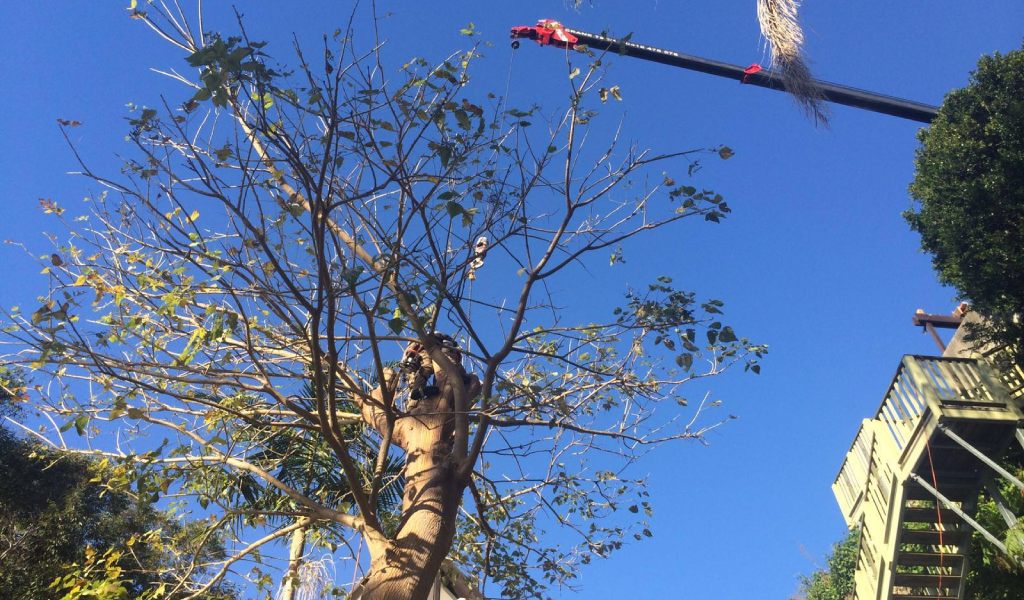
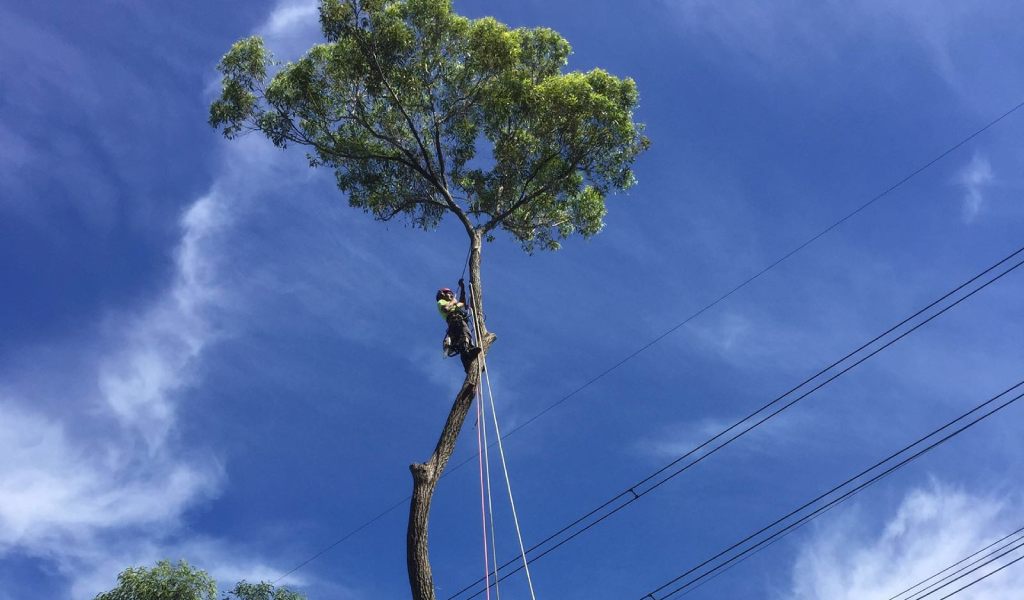
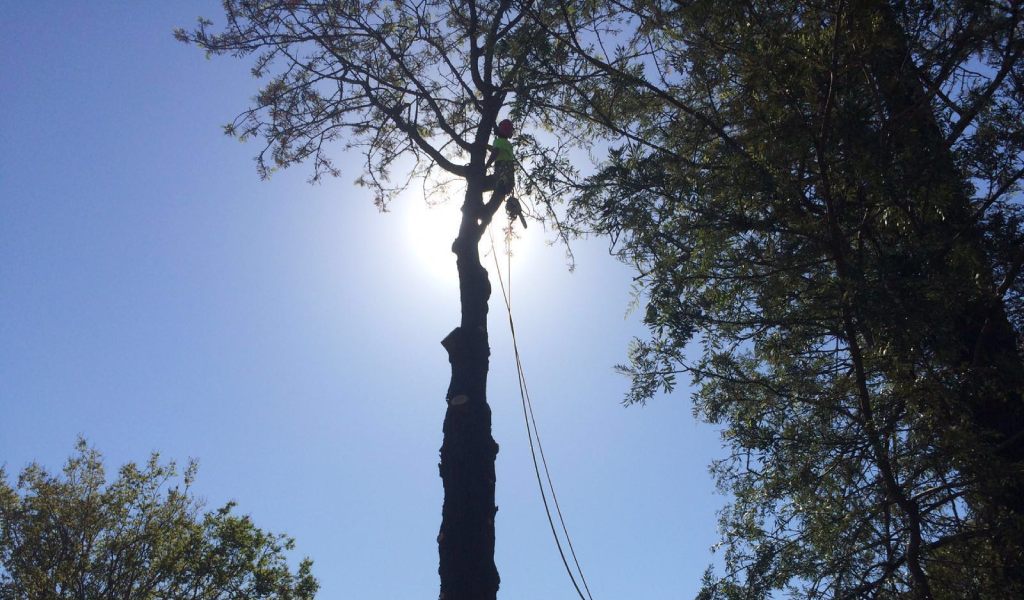
Tree Removal and Cutting in Sydney: The Step-by-Step Process
Let’s get into the actual mechanics of what happens when a professional team shows up to remove or cut a tree in Sydney. This isn’t as simple as “bloke with chainsaw, tree comes down.” For urban Sydney — tight blocks, neighbouring properties everywhere, overhead lines, sloped terrain — it’s a skilled operation.
Step 1: On-Site Assessment and Quote
A qualified arborist inspects the tree in person. They’re looking at species, structural integrity, root system, proximity to structures and services, access for equipment, and whether the job requires a council permit. This is also where the method of removal is determined.
At Ben’s Tree and Garden, every job starts with a free on-site assessment and written quote covering everything — no surprises when the invoice arrives.
Step 2: Council Permit (Where Required)
If your tree needs council approval, a licensed arborist prepares and lodges the application with the required documentation, including an arborist’s report and supporting photographs. Most Sydney council applications take 2–4 weeks when properly submitted — factor this into your timeline if you’re not dealing with an emergency.
Application fees generally sit between $75 and $300 depending on the council, with more complex heritage tree applications requiring a full Development Application process.
Step 3: Site Setup
Safety exclusion zones go up around the work area. Ground cover is laid to protect lawns and garden beds. Equipment — chippers, elevated work platforms, or cranes for complex jobs — is positioned. For trees near roads or driveways, traffic management may be required.
Step 4: Crown Removal and Sectional Cutting
In Sydney’s residential suburbs, trees rarely get felled in one piece — there simply isn’t the space. Instead, the crew works from the top down: branches and sections of the crown are removed methodically, often with rigging systems that allow controlled lowering of cut sections to avoid damage to fences, gardens, roofs, and anything else below.
This is where the skill level of your crew makes the biggest difference. A properly trained arborist climbing team can remove a large tree in a tight backyard without touching the fence on either side. Someone who isn’t trained to that standard can’t.
Step 5: Trunk Removal
Once the crown is clear, the trunk is cut in sections working downward. For properties with clear open space, directional felling may be possible for the remaining trunk — it’s faster. For tight urban sites, sectional cutting continues all the way to the base.
Step 6: Stump Grinding
A stump left in the ground is a termite invitation, a tripping hazard, and — for many species including figs and some eucalypts — a future regrowth problem. Professional stump removal uses a rotating grinding wheel to take the stump below ground level, typically 20–30cm down, leaving wood chip material that can be mixed back into the soil or removed.
Always confirm whether stump grinding is included in your tree removal quote — it often isn’t by default, and adding it later costs more than agreeing to it upfront.
Step 7: Cleanup and Debris Removal
All cut material is chipped and either left as mulch (excellent for garden beds and completely free organic matter) or removed from site. A professional crew leaves your property clean and tidy. You shouldn’t have to do any cleanup after they leave.
Check the full range of tree and garden services to see everything covered under one booking.
Call us and get it done
For additional information regarding the services we offer here at Bens Tree and Garden, be sure to contact our team. We will gladly assist with any and all inquiries.
What Does Tree Removal and Cutting Cost in Sydney in 2026?
Sydney tree removal costs average around $2,354 — approximately 35% above the national average — reflecting urban density, challenging property access, proximity to power lines, and high demand for qualified professionals.
Here’s how that breaks down in practical terms for 2026:
Small tree (under 5m) — backyard ornamental, young Lilly Pilly, small palm: $250–$800
Medium tree (5–10m) — established Jacaranda, mid-sized gum, larger Liquid Amber: $800–$2,500
Large tree (10–15m) — mature Eucalypt, large Camphor Laurel, significant fig: $2,500–$5,500
Extra-large or complex removal (15m+, near structures or power lines, crane required): $5,500–$15,000+
Tree trimming and pruning (rather than removal): $225–$1,800+ depending on canopy size and access
Stump grinding (if separate from removal): $150–$500 per stump
What pushes the cost up:
- Tight backyard access requiring manual equipment carry-in
- Proximity to structures — trees within 3 metres of a building need careful sectional removal, adding $300–$800
- Power line proximity — working near energised lines has serious safety requirements
- Dead or structurally compromised trees — unpredictable wood behaviour requires more caution, adding 20–40% to standard pricing
- Emergency or after-hours callouts — expect to pay 30–50% above standard rates for same-day urgent response
How to keep costs reasonable:
Get at least three written, itemised quotes. Check what’s specifically included: is debris removal in the price? Is stump grinding included? Is permit assistance available? Booking multiple trees in a single visit reduces mobilisation costs significantly — the crew and chipper are already on site. Late summer through winter (February to August) is typically the quieter season for tree services in Sydney, with better availability and sometimes more competitive pricing.
Tree Trimming vs. Tree Removal: What Does Your Situation Actually Need?
This is the question that catches a lot of Sydney homeowners out. The answer isn’t always obvious, and an honest arborist will tell you which one actually applies to your situation rather than defaulting to the more expensive option.
Tree trimming is the right call when:
- The tree is structurally sound and the problem is overhanging branches or excessive canopy spread
- Branches are getting too close to your roof, gutters, neighbouring fences, or power lines
- You want to improve light access to the garden or house
- The tree has heritage or council protection that rules out removal — in which case targeted trimming and crown management is your best tool
The best time for structural pruning in Sydney is late winter to early spring, before the flush of new growth. Summer pruning should be avoided for most species — heat stress and slow healing make it the worst time for anything more than emergency safety work.
Full tree removal is the right call when:
- The tree is dead, dying through the core, or structurally compromised beyond recovery
- It’s a declared invasive or weed species likely to regrow aggressively from any remaining stump
- Roots are causing active damage to foundations, underground services, or drainage
- The tree has been repeatedly patched and trimmed and the underlying issues can’t be managed
Emergency Tree Services: When the Storm Hits at 11pm
Sydney storms are a fact of life — and they don’t wait for business hours. A tree that comes down or partially fails in a storm creates urgent safety situations that can’t wait for a Monday morning booking.
Hazardous trees posing immediate risk to people or property can be addressed without prior council approval — but a qualified arborist with minimum AQF Level 3 certification needs to assess and document the emergency condition. Keep those photos. Call the SES (132 500) first if there’s immediate danger to life — they can secure the area and manage the acute risk while you organise professional tree removal at a more reasonable rate.
Ben’s Tree and Garden provides 24/7 emergency tree removal across Sydney for exactly these situations. Save the number before you need it — because at 11pm with a branch through the carport, you don’t want to be googling.
Beyond Tree Removal: Other Services Worth Knowing About
Tree work rarely exists in isolation. Here’s what else might be relevant for your property:
Land clearing. Got a larger block that needs clearing before development, landscaping, or new construction? Land clearing in Sydney involves removing trees, stumps, vegetation, and debris to a cleared state ready for the next phase. Permits are almost always required for clearing work at any significant scale.
Garden maintenance. Once the tree work is done, the garden doesn’t maintain itself. From regular lawn care and garden bed maintenance to full garden transformations, professional gardening services mean you’re not just sorting the immediate problem — you’re keeping the whole property looking its best.
We service suburbs right across Greater Sydney. Check our service areas page to confirm coverage for your specific suburb and get in touch for a free on-site assessment.
Why Hire a Licensed, Insured Arborist — Not the Guy Who Dropped a Flyer in Your Letterbox
This is worth saying plainly: there’s no legal requirement to hold formal arborist qualifications to advertise as a “tree lopper” in NSW. That means the person who quoted you $400 to take down that big gum might not be trained, insured, or even covered for the damage if something goes wrong.
Here’s why that matters to you as the property owner:
If an uninsured contractor drops a branch through your neighbour’s fence or damages your home, the legal liability can come back to you. Not them — you. Additionally, removing a council-protected tree without permits is your offence as the property owner, regardless of who actually swung the chainsaw.
A legitimate tree service carries full public liability insurance, holds current arborist qualifications (AQF Certificate 3 in arboriculture as a minimum, with lead climbers holding higher certifications), knows the council permit requirements in your area, and will put all of that in writing before the job starts.
Ben’s Tree and Garden is fully insured, carries relevant qualifications across our team, and handles all aspects of a job — from permit advice through to final site cleanup — so you’re not managing a patchwork of different contractors and hoping nobody drops the ball.
Ready to Sort Your Trees?
Whether it’s a single problem tree in the backyard, a block that needs clearing, or you’ve got branches coming over the roofline that need professional attention before storm season — we’re ready to help right across Sydney.
Get a free, no-obligation on-site quote from Ben’s Tree and Garden. We’ll assess what’s actually needed, advise on any council requirements, and give you a written quote that covers every element of the job — no nasty surprises.
The trees aren’t going anywhere on their own. Let’s get them sorted.
Ben’s Tree and Garden provides professional tree removal, tree cutting, tree trimming, stump removal, emergency tree services, land clearing, and gardening services across all Sydney metropolitan suburbs. Fully insured. Free quotes available.